
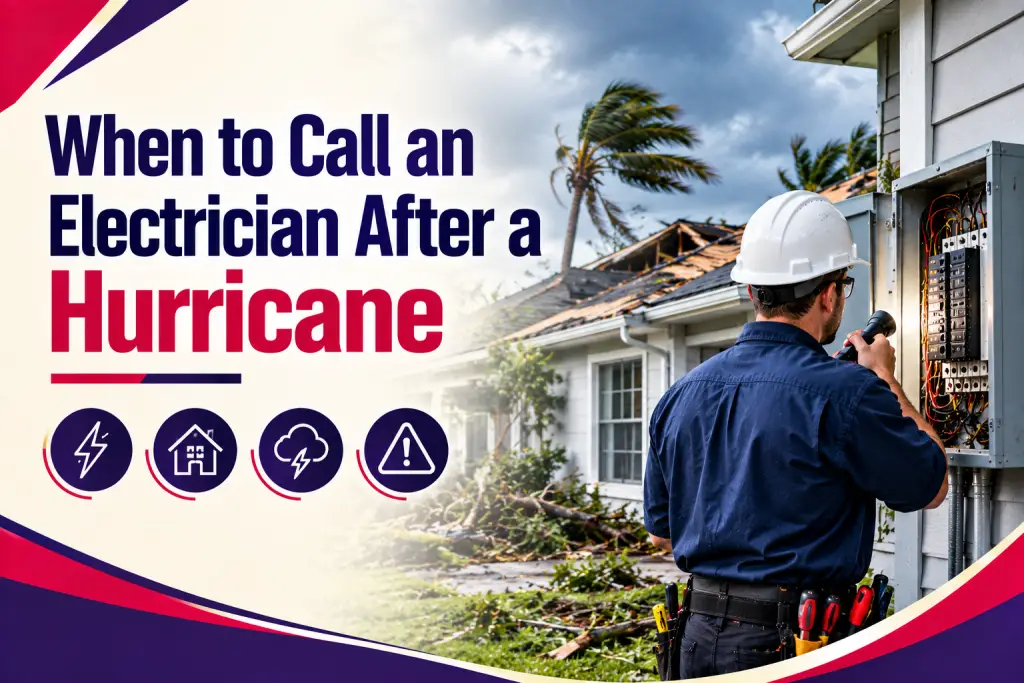
Once a hurricane or major tropical storm passes, the immediate focus shifts to assessing property damage and starting cleanup. However, the period immediately following a storm is also when unseen electrical hazards are at their highest. Hurricane winds, flying debris, and heavy water intrusion can severely compromise your home’s wiring, breaker panel, and outdoor utility connections.
It is vital to remember that post-hurricane electrical damage should never be treated as an ordinary DIY repair. Attempting to restore power or fix storm-damaged components yourself carries severe risks of electrocution and electrical fires.
Here are five clear situations when you should step back and call a licensed electrician after a hurricane.
1. You Notice Visible Electrical Damage
Hurricane-force winds and fallen tree limbs can tear down weatherheads, bend service masts, or pull utility cables away from the side of your house. If you see bent conduit, cracked meter bases, detached electrical boxes, or severed wires on your property, do not touch them. Even if power in your neighborhood is out, lines can re-energize without warning. A licensed electrician must repair your home’s service equipment before utility companies can safely restore power.
2. Electrical Outlets or Equipment Were Exposed to Water
Floodwaters, roof leaks, and driving rain routinely seep into wall cavities, breaker boxes, outlets, and light fixtures. Water damages internal copper conductors, degrades wire insulation, and leaves behind corrosive mineral deposits that cause short circuits and arcing long after the water dries up. If your electrical panel, outlets, or major appliances sustained any water exposure, do not turn them back on. They must be professionally inspected, dried, or replaced.
3. You Experience Power Abnormalities
When power returns to your neighborhood, pay close attention to how your home’s electrical system behaves. Call an electrician immediately if you observe:
- Partial power loss (some rooms or major appliances have no power while others do).
- Flickering, dimming, or unusually bright lights.
- Breakers that trip immediately after being reset.
- Buzzing, sizzling, or crackling sounds coming from outlets, switches, or the breaker box.
4. You Discover Damaged Wiring or Exposed Components
Storm debris and falling ceiling drywall can crush or tear exposed electrical wires in attics, garages, and crawlspaces. If you find frayed cables, pinched wiring, or loose connections, leave the main breaker off for that circuit and call an electrician to assess and splice or replace the damaged wiring according to code.
5. You Have Generator or Backup-Power Concerns
Whole-home standby generators and transfer switches work hard during prolonged post-hurricane blackouts. If your generator fails to start, makes unusual mechanical noises, smells like burning wire insulation, or fails to transfer power smoothly when utility power returns, call a professional. Never attempt to bypass a transfer switch or alter generator wiring yourself, as improperly connected backup systems can backfeed high voltage into the grid, endangering utility workers.
Safety Always Comes First After a Storm
Navigating the aftermath of a hurricane is stressful, but taking shortcuts with storm-damaged electricity can turn a property recovery effort into a life-threatening disaster. When in doubt, keep the power switched off and rely on a qualified electrician to inspect, repair, and safely certify your home’s electrical system.