
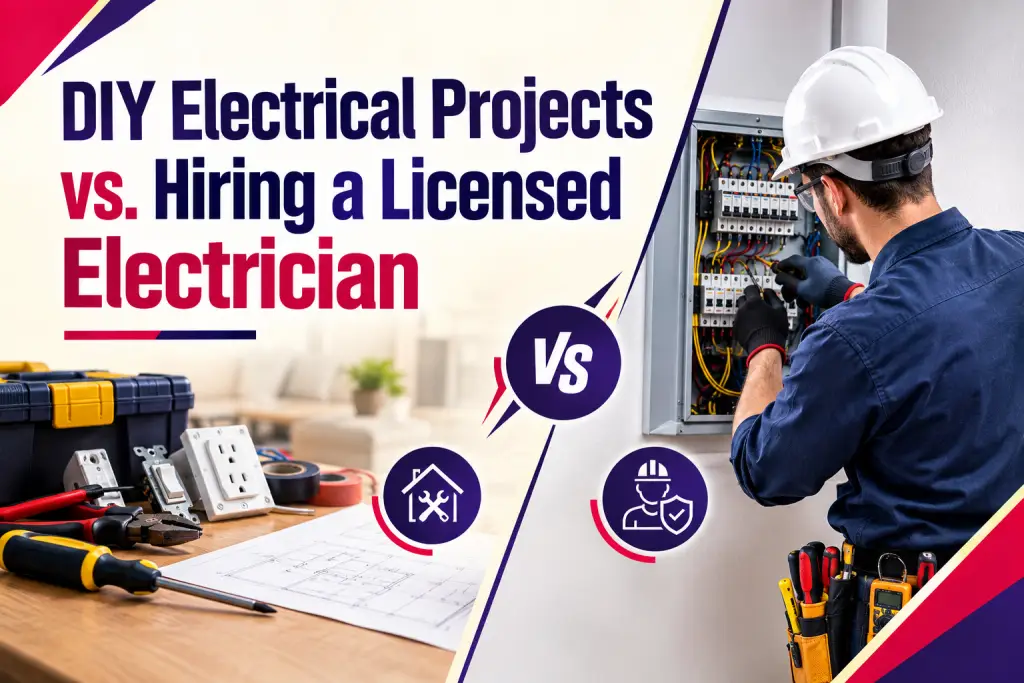
With countless home improvement tutorials available online, it can be tempting for homeowners to take on their own electrical repairs and upgrades. However, unlike painting a room or assembling furniture, working with electricity carries inherent hazards. Even minor mistakes in wiring or installation can create severe risks of electrical shock, structure fires, and extensive property damage.
Knowing where the line falls between a safe DIY task and a job that requires a licensed professional is essential for protecting your home, your family, and your wallet.
What Electrical Work Can Homeowners Safely Approach Themselves?
For minor cosmetic updates that do not alter your home’s permanent wiring, a confident homeowner can often manage simple tasks—provided the main circuit breaker is turned off and tested first. Examples include:
- Replacing existing wall switch or outlet faceplates.
- Swapping out a simple light fixture on an existing, fully functioning junction box.
- Replacing light bulbs or installing plug-in smart devices and surge protectors.
Even with basic tasks, if you ever feel uncertain or notice frayed wires, loose connections, or scorching inside an outlet box, stop immediately and call a professional.
When Is Professional Assistance Required?
Any project that involves installing new circuits, altering existing wiring, modifying your breaker panel, or handling high-voltage appliances strictly requires the expertise of a qualified professional. You should always hire a licensed electrician for tasks such as:
- Upgrading or replacing an electrical panel or fuse box.
- Adding new dedicated circuits for heavy appliances, EV chargers, or hot tubs.
- Full or partial home rewiring.
- Installing Ground Fault Circuit Interrupter (GFCI) or Arc Fault Circuit Interrupter (AFCI) breakers.
- Troubleshooting recurring breaker trips, flickering lights, or burning smells.
- Resolving code violations flagged during a home inspection.
Why Complicated Electrical Work Demands a Licensed Professional
Licensed electricians undergo years of rigorous technical training, apprenticeships, and testing before working independently. Their expertise ensures that every project is completed safely and correctly because they thoroughly understand:
- National and Local Electrical Codes: Ensuring all work complies strictly with updated safety regulations to prevent future inspection failures or insurance claim denials.
- Safe Wiring Practices: Knowing how to properly size, secure, strip, and terminate wires without creating dangerous resistance or loose connections.
- Complex Load Requirements: Accurately calculating circuit capacities to prevent system overloads and voltage drops.
- Proper Circuit Protection: Installing the correct fuses, breakers, GFCIs, and AFCIs tailored to specific room requirements and wire gauges.
- Permitting and Inspection Regulations: Handling necessary municipal permits and managing official inspections so your work is legally documented and compliant.
- Industry Installation Standards: Executing clean, durable, and standardized work that stands the test of time and preserves home value.
Safety and Peace of Mind Come First
While attempting a DIY electrical repair might seem like a way to save money upfront, improper wiring often leads to costly repairs, voided home insurance policies, or life-threatening safety hazards. When safety, structural protection, or legal code compliance is involved, relying on a licensed electrician is always the smartest—and safest—investment for your property.