
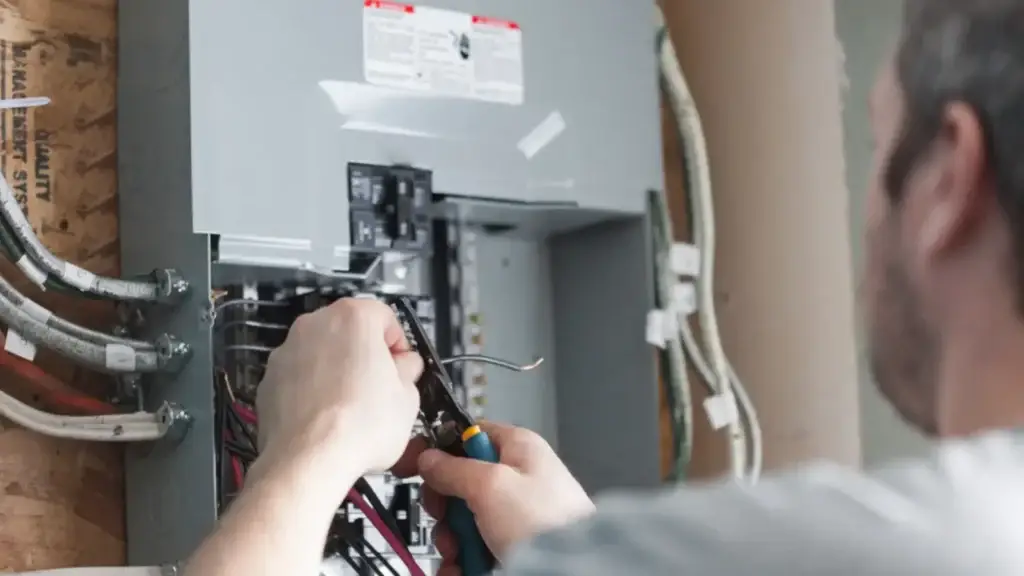
Safety first: If you smell burning or already see smoke coming from your panel, don’t open it. Get everyone out of the house, call the Fire Department, then call us once they say it’s safe.
If your insurer flagged your panel, you probably don’t need to panic, but you do need a plan. Federal Pacific, Zinsco, Challenger and Pushmatic panels are flagged because their breakers may not trip reliably. There’s no recall on any of them, so whether yours has to go is up to your carrier. If it does, a permitted panel replacement clears it. If the Fire Department or your utility company flagged it for heat damage, scorching or a burning smell, that’s different. Don’t wait for your renewal date. Call us right away.
Below are the four brands we hear about most, what’s on the record about each one, and what replacing a panel involves here in Seminole, Orange and Osceola counties. For some of these brands the evidence is solid. For others it’s thinner than the internet suggests, and we’ll explain which is which.
Do you have one of these? Open the panel door (just the door) and read the label:
- Federal Pacific: label says Federal Pacific Electric or FPE. Breakers say “Stab-Lok.”
- Zinsco / Sylvania: label says Zinsco, Sylvania or GTE-Sylvania. Breaker handles are often mixed colors.
- Challenger: label says Challenger. Some older Challenger panels also carry the Westinghouse name.
- Pushmatic: push-button breakers, not switches. Label may say Pushmatic, Bulldog or ITE.
Not sure? Email a photo of the label to estimating@a-lumination.com and we’ll tell you.
Why carriers ask about panel brand at all
The electrical panel holds the breakers, and a breaker’s job is to shut off a circuit before an overload or short turns into heat. If there’s a documented question about whether a line of breakers does that reliably, underwriters want to know when that brand is in a house they’re insuring.
That’s why the 4-point inspection form asks for it. The Citizens Property Insurance 4-Point Inspection Form has a “Brand/Model” line for the main panel and for any second panel. The form doesn’t label any brand as a hazard. Each carrier decides what it will accept, and your agent is the one who can tell you your carrier’s position. Our guide to what a Florida 4-point inspection looks for in your panel and wiring goes through the rest of the electrical section.
It also helps to know that a flag usually isn’t about a recall. A search of the CPSC’s recall database turns up no recall for Federal Pacific, Zinsco or Pushmatic panels. The only Challenger breaker recall listed is a 1988 program for a small batch of ground-fault breakers, covered below.
A word on checking your own panel. Everything in this article can be identified from the outside: open the panel door and read the label, which is usually on the inside of the door or on the inner cover. Don’t remove the inner cover, called the dead front. Parts behind it stay energized even with the main breaker off, and taking it off is a job for an electrician.
Federal Pacific (FPE) Stab-Lok
How to recognize it
The label reads Federal Pacific Electric or FPE, and the breakers are sold under the name Stab-Lok, which usually appears on the label or on the breakers themselves.
The documented concern. In 1983 the U.S. Consumer Product Safety Commission confirmed that many FPE Stab-Lok breakers “fail certain UL calibration test requirements.” Those are the tests that check whether a breaker trips in time during an overload. A New Jersey court later ruled that the company violated the state’s Consumer Fraud Act by cheating on its UL testing.
What’s not settled. The CPSC closed its investigation without a recall. It said it didn’t have the data to prove the breakers cause fires often enough to require one.
What that means for you. The evidence against FPE is the strongest of the four brands. Most insurers that flag panels flag this one. If yours is FPE, plan on replacement.
Zinsco and Sylvania-Zinsco
How to recognize it
The label reads Zinsco, Sylvania or GTE-Sylvania. InspectAPedia notes that certain Sylvania panels and breakers “are in fact of the same product design and origin” as Zinsco. Many Zinsco breakers also have handles in a mix of colors.
The documented concern
The Zinsco evidence comes from electricians in the field, not from a government finding. A Washington state electrician, writing on InspectAPedia, says he has “tested these circuits with up to 30 amps on a 20 amp circuit breaker” and that “the Zinsco circuit breaker will carry the overload for a long time without tripping. This causes the connection to heat up and start arcing to the buss bar.” He also describes breakers so damaged that the part clipped onto the bus “has become welded to the buss,” and one that broke apart when he tried to remove it. There is no Zinsco recall in the CPSC database. The concern rests on what electricians find when they open these panels, which is why it helps to have someone qualified look at yours.
Challenger
How to recognize it
The label reads Challenger, and some older panels carry both the Westinghouse and Challenger names.
The documented concern
The one CPSC action involving Challenger breakers is narrow. In November 1988 Challenger Electrical Equipment Corp. offered replacements for about 9,000 ground-fault breakers, types HAGF-15 and HAGF-20, made between February 22 and April 29, 1988. In those units “a mechanical part may become detached and prevent the ground fault feature” from working. The CPSC notice says “the normal circuit breaker functions are not affected by this problem.”
The broader Challenger concern comes from field reports. InspectAPedia has published photos from inspectors and homeowners, including a Tampa home inspector, showing discolored, overheated bus bars in Challenger panels, and its editor describes panels where the bus insulation was damaged by heat. The same page is careful about what that proves: “we do not have the same large body of failure data for Challenger Electric products as we do for FPE Stab-Lok and some other products.”
Where the evidence is disputed
Not everyone agrees Challenger belongs on this list. A reputable Minnesota home inspector wrote in 2022 that he hasn’t “seen more problems with Challenger panels than any other brand of panel,” and showed scorched panels from several major brands to make the point that overheating isn’t unique to one maker. We take that seriously. A Challenger panel in good condition is a different case from one with heat damage, and we’ll tell you which one you have. Your carrier may still want it replaced either way, and that decision is theirs.
Pushmatic (Bulldog, ITE)
How to recognize it
Pushmatic breakers are push buttons instead of toggle switches, which makes them easy to spot with the panel door open. The label may read Pushmatic, Bulldog or ITE. According to InspectAPedia, the line started with Bulldog Electric Products of Detroit, then passed to ITE and later to Siemens, and a Bulldog-labeled panel found in a home today probably dates from the 1950s or 1960s.
The documented concern
Pushmatic concerns are about age and mechanics. Field reports say the breakers “become very stiff and difficult to operate or reset” over time, and that the on/off indicator can “stay fixed in either position, giving you a false indication of the condition of the circuit.” There is no CPSC recall.
Where the evidence is disputed
You’ll read online that Pushmatic breakers have no magnetic trip and respond only to heat. The same InspectAPedia page carries a rebuttal from a former ITE employee who said the breakers “did have a magnetic trip.” We’d put the weight on what’s clear: these are old breakers, and old breakers that are hard to operate need a close look.
What replacement involves in Seminole, Orange and Osceola
If your carrier wants the panel replaced, the work follows the same path no matter which brand you have.
- We look at your photos, then the panel itself, and tell you plainly what the job involves, including anything else we notice that could come up on the inspection.
- We pull the permit with the building department that covers your address: Seminole, Orange or Osceola County, or your city if it runs its own permitting.
- We coordinate the disconnect and reconnect with your utility. Depending on where you live, that’s Duke Energy, FPL, OUC, Winter Park Electric or KUA.
- We install the new panel and move each circuit onto new breakers.
- The building department inspects the work and closes out the permit.
- You get the paperwork your insurer needs. The Citizens form lets a trade-specific licensed professional sign off on their own section, so an electrician can sign the electrical section. Ask your agent before the work starts whether your carrier wants that, a full new 4-point, or both.
We handle the permit, the inspection and the utility coordination for you. We apply for your permit right away and schedule your replacement as soon as it’s issued. You can read more about our electrical panel services here.
What a new panel includes today. A replacement panel is installed to the current Florida Building Code, which adopts the 2020 National Electrical Code. When the service is replaced, that code requires whole-home surge protection and an outdoor emergency disconnect so firefighters can shut off power without entering the house. The building department will confirm what applies, and we include it in the scope up front.
Is this a good time to go to 200 amps?
It can be. If the panel is coming out anyway, it’s worth asking whether the service size still fits the house. The 4-point form asks whether the amperage “is sufficient for current usage,” and houses built decades ago often run a lot more now than they were wired for. If you have added or plan to add an EV charger, pool equipment, a hot tub, a generator or a kitchen remodel, going to 200 amps during the same project may make sense. If the current service is enough, we’ll tell you, and a same-size replacement is the simpler job. Our post on 100A to 200A service upgrades goes through that decision in more detail.
Text or email photos for a Free Remote Quote
You can start without a visit. Email your photos to estimating@a-lumination.com with your name, address and the best number to reach you. You can also text photos or information to our team at our main office line (407) 298-1412.
Include:
- The panel label, showing the brand and model.
- The panel with its door open so the breakers show. Leave the inner cover on.
- The electric meter and the meter base around it.
- The electrical page of your 4-point or inspection report, if you have one.
- The city or town where the home is located, so we know which building department will handle your permit.
Our estimating team will review them and get back to you with next steps.
A panel replacement is often work nobody budgeted for. We offer financing through Synchrony if that helps.
A-Lumination Electric is a licensed and insured Florida electrical contractor and has served Seminole, Orange and North Osceola counties since 1989. Replacing Federal Pacific, Zinsco, Challenger and Pushmatic panels for insurance compliance is our priority work. Call or text (407) 298-1412, or email photos of your panel to estimating@a-lumination.com for a Free Remote Quote.